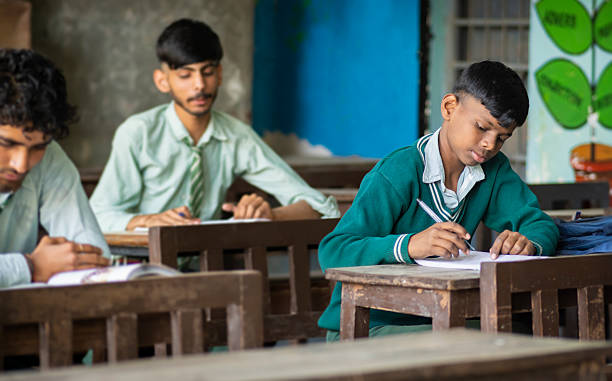

Ever walked past a classroom and wondered why it looks exactly the same as it did 20 years ago? Those rows of desks, chalkboards (or the slightly less threatening whiteboards), and the teacher standing at the front delivering “knowledge” like it’s some sacred secret—it’s like stepping into a time machine that forgot to bring Wi-Fi. And honestly, that’s a big part of the problem. Traditional schooling is failing, not because the teachers are bad or kids are lazy, but because the system itself hasn’t really kept up with how humans learn today.
I remember back in school, I could memorize a formula one day, ace the test the next, and forget everything five minutes later. It wasn’t that I didn’t want to learn, but everything was about passing exams, not actually understanding or connecting ideas. Social media and online communities today are buzzing with parents and students complaining about the same thing. On Twitter, someone recently said, “School feels like a factory, not a place to actually grow.” And honestly, they’re not wrong.
Tests, Grades, and the Forgetting Curve
Here’s a little secret most schools don’t talk about: humans forget a lot, really fast, if we don’t use what we’ve learned. Psychologists call it the forgetting curve, and it’s brutal. But schools still operate on the “teach, test, forget” model. Kids cram, kids stress, kids move on, and by next week it’s like the lesson never happened. It’s like trying to fill a leaky bucket and wondering why the water won’t stay.
Financially, it’s kind of like putting all your savings into a single stock your parents told you was “safe” when the market has changed completely. Schools are stuck in a model that might have worked decades ago when most careers were predictable and routine. But now, kids are growing up in a world where jobs change every few years, technology evolves overnight, and learning anything once isn’t enough.
The Gap Between Real Life and the Curriculum
You know what really hits hard? Real life doesn’t wait for a student to graduate. I’ve seen friends graduate with degrees, and they couldn’t even file their taxes properly or figure out a simple budget. Schools still prioritize Shakespeare and algebra over life skills. Don’t get me wrong, those things are important, but shouldn’t a 16-year-old also know how to negotiate a salary, or how loans work, or even how to manage basic mental health? Social media feeds are filled with 20-somethings complaining, “Why didn’t anyone teach me this in school?” and honestly, they have a point.
Even niche studies show this gap is massive. One survey found that over 70% of young adults felt unprepared for real-world financial decisions after finishing school. That’s huge! Imagine if your phone came with all the features but no instructions on how to charge it safely—you’d probably break it within a week. That’s what schooling feels like sometimes: full of information but no guidance on how to use it.
The One-Size-Fits-All Problem
Another thing—schools assume everyone learns the same way, at the same pace. Spoiler: they don’t. I had a friend who was brilliant at math but would literally zone out in literature class. Another friend thrived on discussion and creativity but couldn’t sit still for long lectures. And yet, both were expected to fit the same rigid model. It’s like forcing a cat to swim because your neighbor’s dog can swim—makes no sense, right?
Teachers try, bless them, but they’re often stretched thin and measured on metrics that don’t really reflect learning. If you’ve ever been stuck in a classroom where half the students are asleep and half are stressed out, you know what I mean. The system focuses on grades and test scores, not curiosity, creativity, or critical thinking.
Technology and the Changing Attention Span
Let’s be real, today’s kids are growing up in a digital world. Phones, TikTok, YouTube, online courses—information is everywhere. Schools still act like a single 45-minute lecture can compete with endless interactive content online. And honestly, it can’t. Students have shorter attention spans, but also more opportunities to learn differently. The irony? Some schools ban phones while online influencers teach finance, coding, or art tutorials better than textbooks ever could.
The Emotional Toll
Traditional schooling isn’t just failing academically; it’s failing emotionally too. Mental health issues among students are on the rise, and there’s a direct link with rigid schooling structures. The pressure to perform, standardized testing, social comparison—it all adds up. One student online wrote, “School is like a pressure cooker—you either boil over or shut down.” And for too many, that’s exactly what happens.
Small Fixes, Big Change
Does this mean we should abandon schools entirely? Not necessarily. But we need a rethink. More project-based learning, life skills integrated into the curriculum, flexible pacing, and emotional support could make a huge difference. Even small things like allowing discussion, hands-on projects, and learning outside textbooks can make learning feel alive again.
I feel like we’re at a crossroads. The world has changed, but classrooms haven’t. It’s a bit like trying to drive a vintage car on a racetrack—nostalgic, sure, but you’re not winning any races. Kids today need a system that’s not just about passing tests, but about actually understanding the world they’re about to step into. Otherwise, we’re just training them to be excellent test-takers, not excellent humans.
If you’re thinking about your own schooling experience, or a kid’s, it’s worth asking: are they learning life, or just memorizing pages? Because that gap is exactly why traditional schooling is struggling to stay relevant in 2026.
For parents and curious learners, exploring alternatives or supplements to traditional schooling is becoming more common. And if you’re checking out options, you might want to look at programs that actually combine core academics with real-world skills—think financial literacy, coding, or even entrepreneurship. It’s a small step, but it can save a lot of stress later.